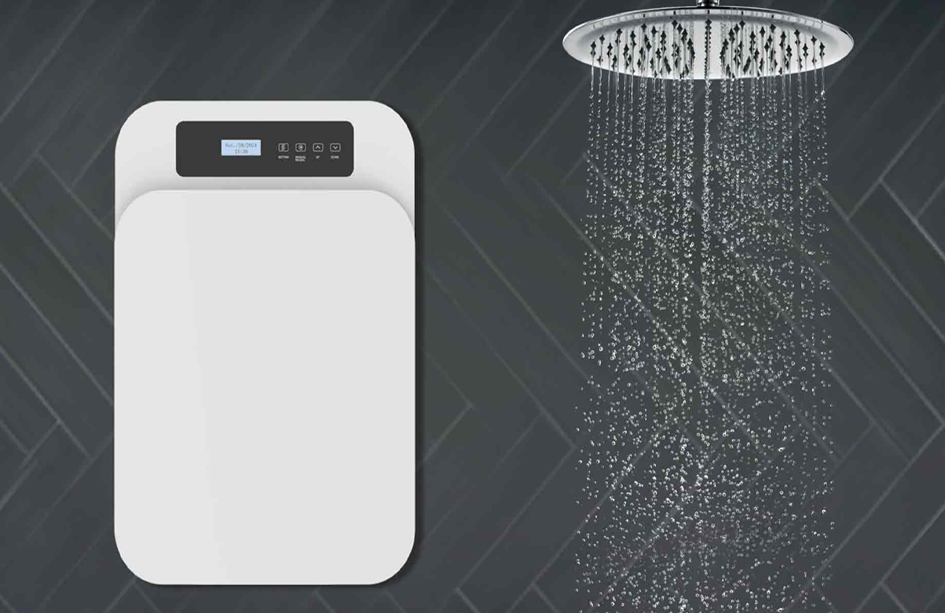
A hard water softener for bathroom can make a noticeable difference if you live in a city where the water has high levels of calcium and magnesium. While it doesn’t purify drinking water, it helps reduce the hardness that causes scale build-up on taps, showerheads, and bathroom fittings. If you have started to notice scale marks, rough-feeling water or increased cleaning effort, it’s often a sign that hard water has become part of your daily routine. A sustainable solution would be installing a hard water softener system that can help protect bathroom fixtures while making everyday cleaning and bathing more comfortable.
Why Bathrooms Show Hard Water Damage First?
Hard water doesn’t affect every part of the house equally. The bathroom is where you tend to notice it first because it’s constantly exposed to running water.
Every shower, every hand wash, and every splash around the basin leaves behind tiny traces of naturally occurring minerals. Over time, those minerals begin to collect on taps, showerheads, tiles and glass partitions. It happens so gradually that many homeowners simply get used to cleaning more often without realising there’s another way to tackle the problem. That’s one reason a hard water softener for bathroom is often considered before homeowners think about treating the rest of the house.
How Hard Water Affects Bathing and Bathroom Maintenance?
A cleaner bathroom is certainly a welcome benefit, but it’s rarely the only reason people start looking at water softening. Hard water can also make soaps and body washes less effective because they react with calcium and magnesium before they can lather properly. That often means using more soap than expected, spending longer rinsing and still feeling like a residue has been left behind.
Read More: How Python Developers Are Building AI Agents in 2026
Many people also notice that their hair feels rougher or their skin feels drier after bathing, particularly in cities known for harder water. While these experiences can vary from person to person, reducing water hardness often changes the way everyday bathing feels just as much as it changes the appearance of bathroom fittings.
Water Hardness Varies by Source: Not Every City Has the Same Water
One of the reasons hard water is so widely discussed is that water quality isn’t the same everywhere. Some cities primarily receive treated surface water, while others rely more heavily on groundwater, where calcium and magnesium levels are often higher. Even neighbouring areas can experience noticeable differences depending on the local water source. That is why there isn’t a single solution that suits every home. Before choosing a hard water softener for bathroom, it’s worth understanding the nature of the water entering your home instead of assuming that every household has identical requirements.
Understanding What the System Actually Does: How a Water Softener Reduces Hardness?
A water softener isn’t designed to replace a drinking water purifier. Its purpose is different. Most residential water softeners use an ion exchange process to remove calcium and magnesium ions responsible for water hardness. Water passes through a bed of resin beads, where these hardness minerals are exchanged with sodium or potassium ions. This helps reduce scale formation on plumbing fixtures, showerheads, water heaters, and bathroom fittings. The softened water then flows through the homes plumbing for everyday use.
Should You Treat Just the Bathroom or the Entire House?
This is a question many homeowners eventually ask. If hard water is mainly affecting bathroom fittings, showerheads and bathing, starting with a hard water softener for bathroom may be a practical approach. On the other hand, if mineral deposits are also appearing in the kitchen, washing machine, water heater and other plumbing fixtures, it may be worth considering whether a water softener for house would be more appropriate. The answer depends less on the size of the home and more on how widespread the effects of hard water have become.
A Better Way to Deal With Hard Water
Living in a hard water city doesn’t necessarily mean constantly scrubbing bathroom fittings or trying a new shampoo every few months in the hope that something changes. Sometimes, the better approach is to look at the water itself.
Read More: Walking the Giants: Four Epic Nepal Treks That Change Your Life Forever
Choosing a hard water softener for bathroom is ultimately about reducing the effects of hard water before they become part of your everyday routine. Understanding where your water comes from, how it’s affecting your home and whether the problem is limited to the bathroom or extends throughout the property will help you decide if a bathroom-specific solution or a water softener for house is the better fit. The goal isn’t to eliminate every mineral or install the most advanced system available. It’s simply to make everyday life a little easier by matching the right solution to the water your home receives.