Why graffiti has become part of European city culture
Graffiti is one of the most visible forms of contemporary urban art, but it is not the same everywhere. The history of the local scene, the architecture of the city, the availability of walls and the relationship between artists and the public all influence what visitors see. That is why travelling through Europe can reveal very different versions of graffiti even when the basic visual language remains recognisable.
Amsterdam, Berlin, Paris and Barcelona are often associated with street art and graffiti, but each city offers a different experience. For travellers, the most interesting approach is not simply to collect photographs of famous walls. It is to understand why graffiti has become part of the character of these destinations and, where possible, to experience the techniques themselves.
Amsterdam: graffiti alongside a creative urban culture
Amsterdam has a long association with alternative culture, music, design and visual experimentation. Its compact urban environment means that visitors can encounter street art in very different settings, from central neighbourhoods to former industrial areas and creative districts.
What makes Amsterdam particularly interesting is the contrast between its historic architecture and contemporary visual culture. Graffiti can appear on surfaces that sit close to older buildings, modern developments or spaces shaped by alternative culture. The result is not one single Amsterdam style, but a changing combination of local and international influences.
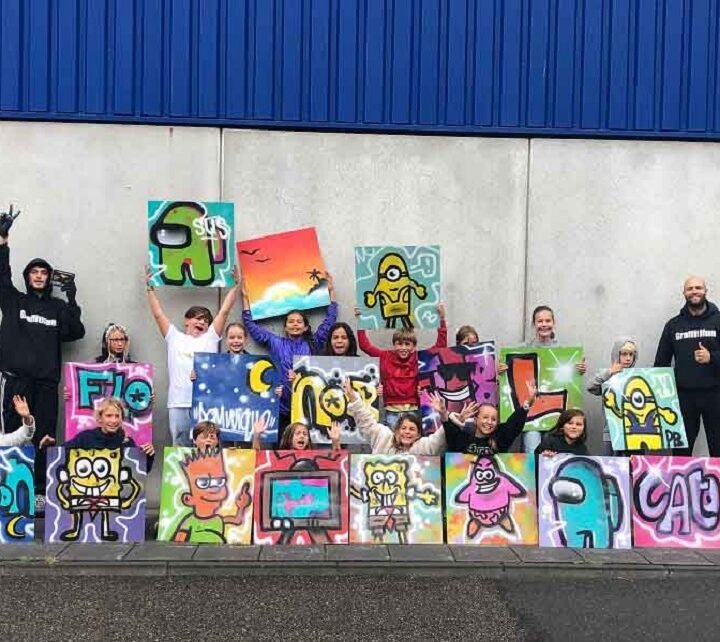
For travellers who want to move from observing graffiti to making it, a graffiti workshop in Amsterdam, Utrecht, Rotterdam or Zaandam can provide a practical introduction to lettering, spray-paint technique and the creative process behind a finished piece.
Berlin: a city where graffiti became part of the visual landscape
Berlin is one of Europe’s best-known destinations for street art and graffiti. The city’s history, alternative cultural movements and abundance of large urban surfaces helped create an environment in which murals, graffiti and other forms of public art became highly visible.
The scale of Berlin’s urban art is one of the things that makes the city different from destinations where street art is concentrated in only a few tourist locations. Visitors can encounter large murals, detailed lettering and smaller pieces across different neighbourhoods, while the city’s changing architecture continues to create new contexts for artists.
Berlin also demonstrates why graffiti should not be treated as a static tourist attraction. Some pieces remain for years, while others disappear through weather, redevelopment or new work. The city is therefore best experienced as a changing visual environment.
Paris: graffiti meets a much older art tradition
Paris has an artistic reputation that long predates modern graffiti, but contemporary urban art has become part of the city’s visual identity as well. Graffiti and street art can be found alongside an urban environment already filled with centuries of painting, architecture, sculpture and design.
That contrast is particularly interesting for visitors because it places a relatively modern art form inside one of Europe’s oldest artistic capitals. Lettering, murals and street interventions create a contemporary layer over neighbourhoods that may otherwise be associated with traditional art and historic architecture.
Paris therefore shows how graffiti can move between cultural contexts. It can be connected to street culture while also becoming part of the broader visual conversation of an international art city.
Barcelona: colour, architecture and street art
Barcelona provides another distinctive setting for urban art. The city’s architecture, public spaces and strong visual identity create an environment in which murals, illustrations, lettering and other street-art techniques can interact with the surrounding buildings.
The relationship between street art and architecture is especially noticeable here. Scale and colour can change the way a wall is perceived, while artists can use existing structures as part of the composition. For visitors, that makes exploring street art a useful way to move beyond the most familiar tourist routes.
Barcelona also illustrates the broader difference between graffiti and street art. The city contains work that is strongly lettering-based as well as murals and illustrative pieces that sit further away from traditional graffiti writing.
What these cities have in common
Despite their differences, the major graffiti cities of Europe share several characteristics. They have active creative communities, large and varied urban spaces and audiences interested in contemporary visual culture. They also demonstrate how graffiti can move between independent artistic practice, commissioned public art and organised creative experiences.
Another common factor is participation. Visitors are no longer limited to looking at graffiti. Workshops, mural projects and other creative activities make it possible to learn some of the techniques behind the art form. This provides context that a sightseeing tour alone cannot offer.
From sightseeing to hands-on graffiti
A traveller can spend hours looking at graffiti without understanding how difficult the technique can be. Spray paint reacts immediately to distance, speed and movement, while lettering requires planning and control. Trying even a simple piece can make the work of experienced artists much easier to appreciate.
That is why a graffiti workshop can fit naturally into a city trip. It adds an active element to a day that might otherwise consist mostly of walking, photographing and observing. Participants can learn the basics, create a design and leave with a physical reminder of the experience.
Workshops-graffiti.nl describes a programme in which participants begin with an introduction to graffiti history and techniques, create a design on paper and then work with spray cans on a personal panel or collective artwork. The organisation says workshops can be organised across the Netherlands and Benelux and are suitable for different group types.
Why Amsterdam is an especially practical starting point
Among the major European graffiti destinations, Amsterdam has another advantage for travellers from the Netherlands and nearby countries: it is easy to combine with a wider city programme. A group can explore the city’s historic centre, visit a museum, discover urban art and then take part in a workshop without needing a complicated transfer to another destination.
The workshop itself can also be adapted to the group. Companies can use it as a creative team activity, schools can connect it to art education and friends or families can treat it as an unusual shared experience. The basic graffiti techniques remain the same, but the purpose of the visit can be very different.
The difference between a graffiti wall and a graffiti workshop
A public graffiti wall is primarily something to observe. A workshop is structured around participation. The visitor becomes involved in the choices that an artist normally makes: what to write, how to construct the letters, which colours to use, how large the design should be and how to control the spray.
This distinction is important because it changes the role of the traveller. Instead of being an audience member, the participant becomes part of the creative process. The result does not have to be professional to be meaningful; the value lies in understanding the medium through direct experience.
Planning a European graffiti experience
Graffiti can be incorporated into many kinds of travel. A weekend with friends might include a workshop after sightseeing, while a company visiting Europe could use one as a team activity. Students can connect the experience with art history or visual communication, and families can use it as a creative activity during a city break.
The most important factor is choosing an experience that matches the destination and the group. In a city with a strong graffiti history, the cultural context can be particularly valuable. In other locations, the workshop itself may be the main creative attraction.
Why graffiti continues to travel across borders
Graffiti developed within particular urban communities, but its visual language has travelled remarkably well. Lettering, colour, scale and personal style can be recognised across countries even though local scenes interpret them differently.
That international character makes graffiti an unusual form of travel culture. It gives visitors something that is simultaneously local and global. A piece in Amsterdam can look completely different from one in Berlin or Barcelona, yet the basic visual vocabulary connects them.
For travellers who want to understand that connection rather than only photograph it, a workshop offers a simple entry point. It turns the visual language of the street into something people can learn, test and create themselves.
A different way to travel through Europe
The major graffiti cities of Europe are not identical, and that is exactly what makes them worth exploring. Amsterdam offers one relationship between street culture and a historic city, Berlin another, while Paris and Barcelona bring their own architectural and artistic contexts.
Taken together, they show how graffiti adapts to its surroundings. The art form can remain connected to its roots in lettering and personal identity while becoming part of murals, public art, education, tourism and creative events.
Travelling through these cities with an interest in graffiti therefore offers more than a collection of photographs. It provides a way to see how people use public space, how visual culture changes from place to place and how an art form can continue to evolve while remaining recognisable around the world.